
YouTube Automation Agency vs Podcast Production Agency (2026): The Honest Comparison
A YouTube automation agency builds a whole faceless channel for you. A podcast production agency records, edits, and distributes your show. Both promise “done for you” content, but they are not the same service. Short answer: a podcast agency makes your show; an automation agency makes your channel — one needs you to talk, the other needs you to approve videos. The video podcast sits in the middle, and that overlap confuses buyers. This guide covers what each one delivers and costs, and which fits your goal.
What a YouTube automation agency actually does
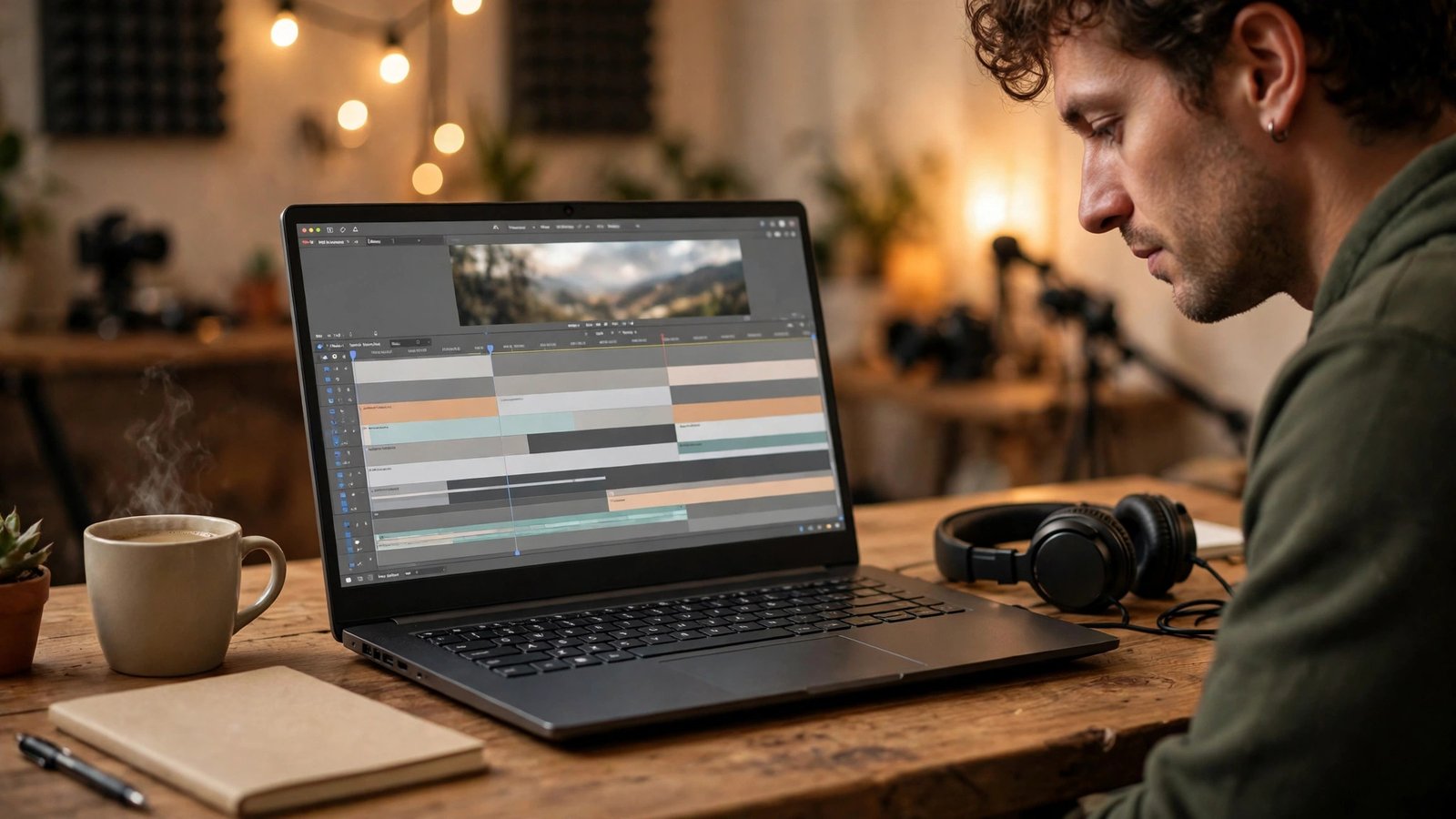
A YouTube automation agency runs a faceless channel end to end. One team owns the full chain: research, scripting, voiceover, editing, thumbnails, titles, SEO, uploads, and management. You never record or appear on camera — you review finished videos. At Xoomo YouTube Automation, that chain is what the done-for-you faceless YouTube channel service covers, and our faceless YouTube channel management keeps it organized as it grows.
The output is volume with a system behind it. Xoomo’s monthly plan is 25 long videos plus 10 Shorts, each long video running 8 minutes with thumbnail, SEO, and management. One team owning every step means a weak video has one owner — no passing blame between five freelancers.
What a podcast production agency actually does
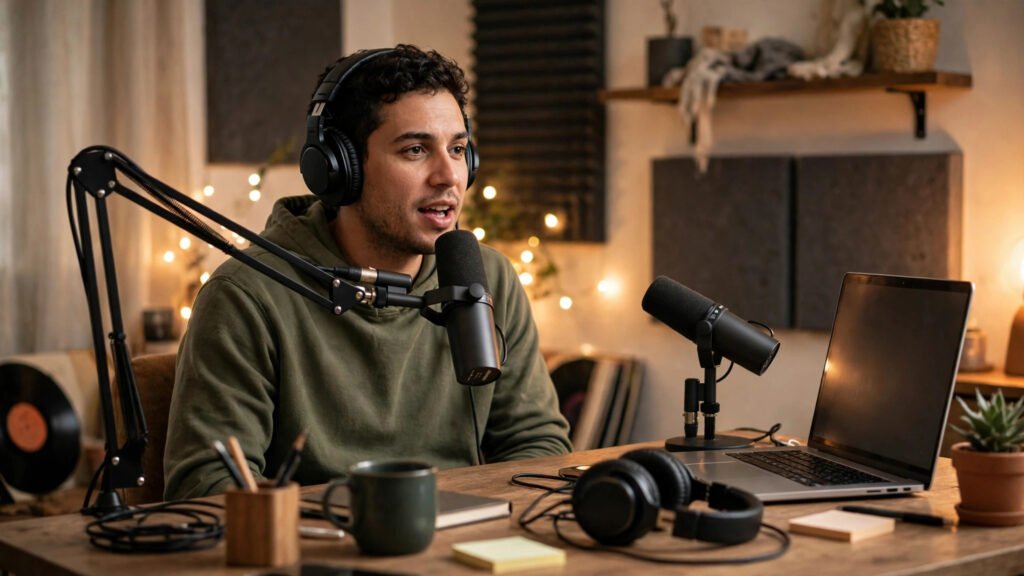
A podcast production agency builds your show around your voice. The core job is recording and audio: sessions, cleanup, editing, mixing, and mastering. Good agencies add strategy, show notes, guest booking, and distribution.
The key difference is that you are the talent. You record every episode; the agency makes you sound good, but the show only exists when you sit down and talk. That is a strength when your expertise is the product — a founder interviewing ideal clients, or a coach building authority one conversation at a time. AshMedia, a B2B podcast agency, builds its offer around guest booking.
Podcasts are a slower discovery game: apps are not search engines, so a listener usually finds a show through a recommendation, a guest sharing the episode, or another channel. That is why strong podcast agencies now treat YouTube as part of the job. Sweet Fish puts it bluntly: producing a video podcast in 2026 without a YouTube strategy is not enough.
Where the two overlap: the video podcast
The overlap confuses buyers for a good reason. Record a conversation on camera and you have three products: an audio podcast, a long YouTube video, and a stack of vertical clips. G Media, a Las Vegas studio, advises most businesses in 2026 to record a video podcast for both — one session produces a YouTube episode, an audio feed, and a week of clips. Cohost, Micdrop, and PodServe agree.
Vontekk, a YouTube content team, answers the exact buyer question: “Do I need a podcast agency or a YouTube content team for a video podcast?” It draws the line by scope: a podcast agency owns the recording and the audio show, while a YouTube team owns framing, hooks, titles, thumbnails, edits, clips, publishing, and analytics. Uploading the same podcast file with a generic title leaves most of the YouTube work undone.
That overlap explains why YouTube matters to podcasters now. Industry reporting cited across several 2026 guides puts YouTube as the most-used platform for podcast consumption. So the honest question is not “podcast or YouTube?” It is “who owns the YouTube side of my show?” If the answer is nobody, your episodes sit unoptimized.
YouTube automation agency vs podcast production agency: side by side
| Factor | YouTube automation agency | Podcast production agency |
|---|---|---|
| What you get | A full faceless channel: research, scripts, voiceover, editing, thumbnails, SEO, uploads, management | A produced show: recording, audio editing, show notes, distribution, clips, sometimes guest booking |
| Who records | Nobody on your side — the agency produces everything | You — every episode needs your time on the mic |
| Main platform | YouTube, built for search and recommendations | Spotify, Apple Podcasts, and audio apps; YouTube is often an add-on |
| Output per month | High volume by design — Xoomo delivers 25 long videos + 10 Shorts | Usually 4–8 episodes, each one a longer recording session |
| Discovery | Search, suggested videos, Shorts — built-in distribution | Guest sharing, recommendations, and cross-promotion — slower, deeper reach |
| Strategy and SEO | Core to the service: titles, thumbnails, keywords, retention | Varies widely — some agencies own it, some only handle audio |
| Accountability | One team owns the whole chain, so a weak video has one owner | Split — you own the content, the agency owns the production |
| Best for | Owners who want a searchable video library without recording | Experts who want authority and relationships through conversation |
What each one costs
Neither service has a standard price — any exact figure online is one vendor’s quote. Treat the ranges below as published guideposts, and confirm any quote on a live sales call.
Vontekk’s 2026 roles-and-costs guide puts a full-service YouTube agency at about $3,000–$10,000 or more per month, and channel management without ads at about $3,000–$8,000 per month. OutlierKit’s 2026 guide lands in a similar band, at $1,500–$10,000 or more per month. These premium retainers show why a fixed-price package stands out.
AshMedia lists B2B podcast packages starting at $1,500 a month, with a published range of $1,500–$8,000 per month. G Media, a studio-based producer, charges about $149 for a first fully edited episode, and $750 per hour for mobile production with a three-hour minimum. The range is wide because “podcast production” can mean one edited audio file or a full content engine.
Xoomo prices the other way: fixed packages, fixed video counts, no hourly meter. Every package includes thumbnail, SEO, and channel management, and every long video runs 8 minutes.
| Package | Price | Per video |
|---|---|---|
| 5 videos | $390 | $78.00 |
| 10 videos | $790 | $79.00 |
| 12 videos | $890 | $74.17 |
| 15 videos | $1,099 | $73.27 |
| 20 videos | $1,499 | $74.95 |
| 25 videos | $1,899 | $75.96 |
One honest note: the per-video price does not fall in a straight line. The 10-video package works out to $79.00 per video, slightly above the 5-video package at $78.00, and the lowest per-video cost is the 15-video package at $73.27. Pick the package that matches the volume you can actually review and publish.
See our packages page or our contact page.
When a podcast production agency is the right pick
Choose the podcast agency when the conversation itself is the value.
- Your guests are your growth plan. If each episode puts you in front of an ideal client, the interview does sales work no scripted video can do.
- You enjoy talking and have the time. A show needs a steady recording habit — a couple of hours a week. If that sounds like a chore, you will quit by episode four.
- Your buyers decide on trust, not search. B2B services and high-ticket coaching close on credibility, and a long conversation builds it faster than a short video.
- You already have a YouTube team. If someone owns your channel strategy, a podcast agency can feed it episodes and clips.
When a YouTube automation agency is the right pick
Choose the automation agency when you want a channel that grows without your calendar.
- You do not want to record. If a weekly recording session kills the project, a faceless channel removes the bottleneck.
- Your buyers search before they buy. How-to queries and comparison videos catch people the moment they look for an answer — YouTube’s home turf.
- You need volume to learn what works. Twenty-five videos a month tests topics and thumbnails far faster than four podcast episodes.
- You want one accountable owner. One team running research through publishing means one conversation when results stall — see our agency vs hiring freelancers comparison and our agency vs virtual assistant comparison.
- You are building a library, not a show. Old videos keep attracting viewers for years, while a podcast episode’s moment passes fast.
Our hire a faceless YouTube team page lays out what a full team covers.
Buyer checklist: 7 questions before you sign
Use this list on every sales call.
- Who owns the finished work? You should own the channel, the videos, and the audio files.
- What exactly is delivered each month? Count videos or episodes, not hours.
- Who owns the YouTube side? If you hire a podcast agency, ask who writes the titles and designs the thumbnails — if the answer is nobody, budget for it separately.
- How many revisions are included? One round is standard; unlimited revisions means the agency has no process.
- What does month one look like? A real plan names the first deliverables and dates; a vague “we’ll get started” is a warning.
- Can I see real work, not just a sales deck? Ask for finished episodes or channels you can watch yourself.
- What happens if I pause or cancel? Keep everything produced so far, with exit terms in the contract before you pay.
Red flags to watch for
Both industries have honest operators and fast talkers.
- Guaranteed views, subscribers, or income. No agency can guarantee results on YouTube.
- “Passive income on autopilot” language. A channel needs review and course correction — autopilot is a sales word, not a plan.
- No sample work you can check. An agency with no episodes to hear or channels to watch is asking you to buy blind.
- Mass-produced, copy-paste content. YouTube treats generic, repetitious content as ineligible for monetization, so identical videos put your channel at risk.
- They keep your channel or your files. If the agency owns the login or the finished videos, you are renting your own content.

Frequently asked questions
Can a podcast agency also run my YouTube channel?
Some can, and some only claim to. The agencies that do it well treat YouTube as its own discipline — topic framing, hooks, titles, thumbnails, retention editing, and analytics — not a place to dump the episode file. Ask to see a YouTube channel they manage.
Can an automation agency turn my podcast into videos?
Yes, in the sense that a full-service team can cut episodes into long-form videos and Shorts. But a faceless automation agency builds scripted videos from research, not from your recordings. If you want a faceless channel, you do not need to record at all.
Which one is cheaper?
Ranges overlap heavily: full-service YouTube agencies are often quoted around $3,000–$10,000 or more per month, and B2B podcast production from $1,500 a month upward. Xoomo’s fixed packages run $390–$1,899 for 5–25 finished videos — lower than most monthly retainers because the scope is fixed.
Do I have to choose one or the other?
No. Many businesses run both from one recording session: a video podcast feeds the audio show, the YouTube channel, and the clips. The trick is assigning a clear owner to each output — if nobody owns the YouTube packaging, the video version underperforms.
Will an agency guarantee views or income?
No — and you should walk away from any agency that says it will. No agency can guarantee views or income, because YouTube’s algorithm, your niche, and audience behavior are outside any vendor’s control. A good agency guarantees deliverables, process, and honest reporting. Client results are shared only as “Client channel — identity protected under NDA.”
Who owns the channel and the content?
You should. With Xoomo, you own your channel and every video we deliver. Confirm the same with any podcast agency: you should own the audio files, the show feed, and the episode archive.
The bottom line
A podcast agency is the right call when your voice and your guests are the product, and you can record every week. A YouTube automation agency is the right call when you want a searchable video library that grows without your calendar. The video podcast lets you have both — if someone clearly owns the YouTube side. Pick the model that matches the job, and never pay for guaranteed results. If the YouTube side is the job, Xoomo builds it: 25 long videos plus 10 Shorts a month.


