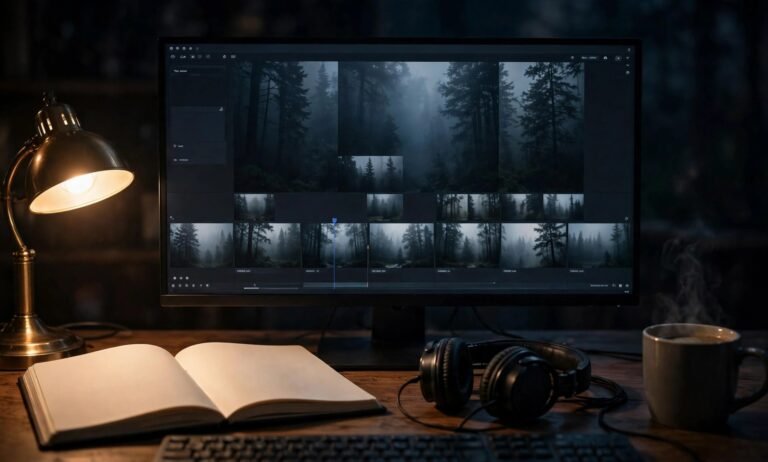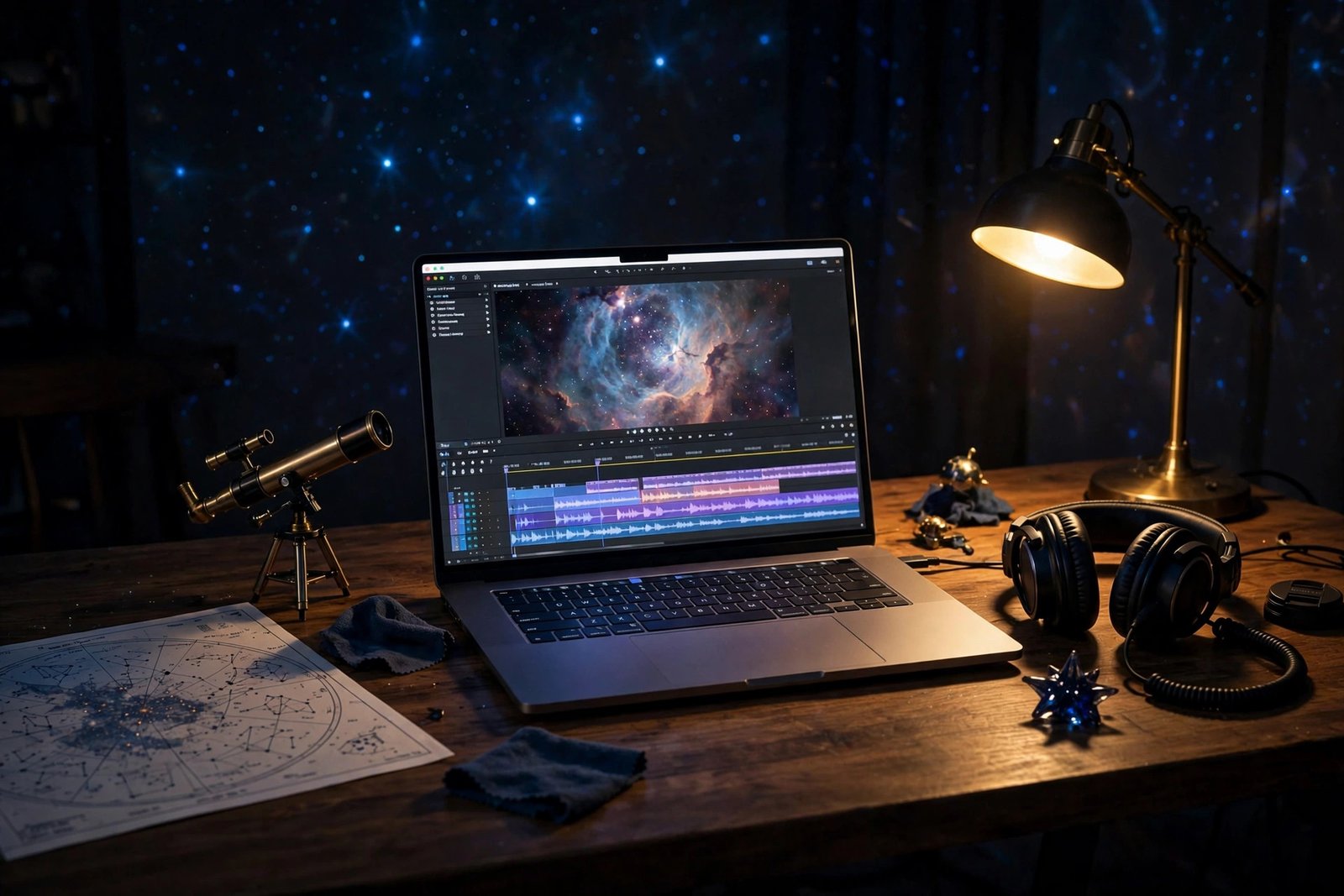
Faceless Space Channel Service (2026): The Honest Production & Service Guide
Space has a strange advantage on YouTube: nobody expects the creator to appear on camera. Viewers come for the black hole, the rover landing, or the star that should not exist — not for a face in the corner of the screen. That makes a faceless space channel one of the most natural fits in the faceless format, and one of the easiest niches to get wrong. A slideshow of nebula pictures with a flat voiceover will not hold anyone for eight minutes. A well-written explanation with honest sourcing, strong visuals, and a calm voice can.
This guide covers what a faceless space channel service should actually deliver, what kinds of space videos work without a presenter, where production usually breaks down, and how to judge a provider before you pay. It should save you from the most common version of this niche: beautiful footage, thin scripts, and a channel that stalls.
Why space works so well without a face
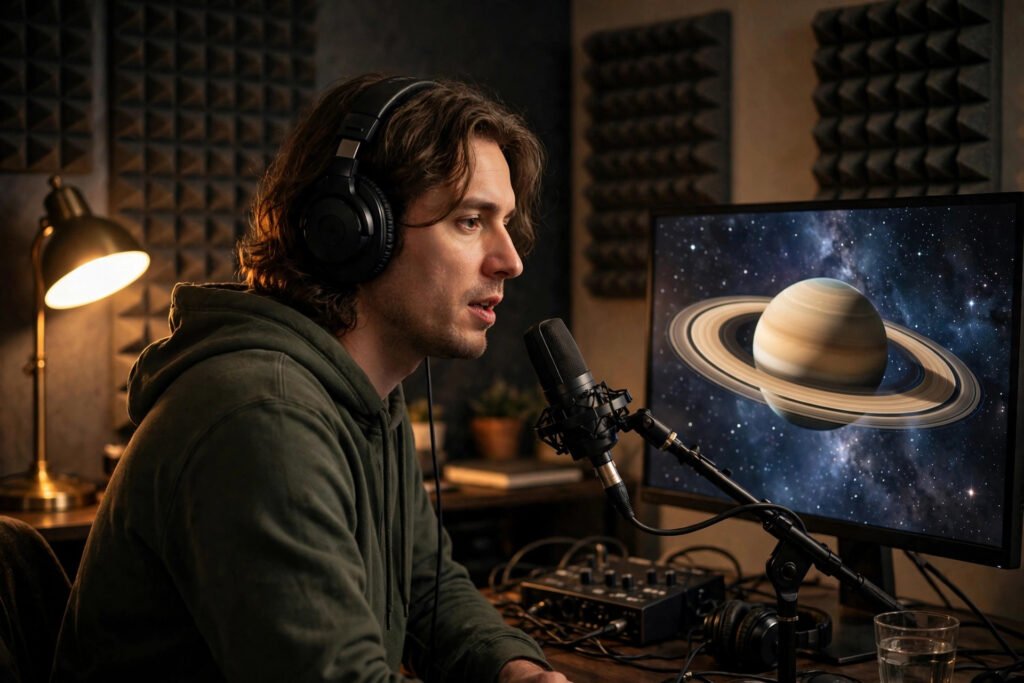
Most YouTube niches fight the faceless format. Cooking wants hands. Fitness wants a body on screen. Space wants the opposite: scale, mystery, and visuals no single person could film. A narrator can walk viewers through the rings of Saturn or a galaxy discovered last year, while the screen shows exactly what the words describe. The subject carries the wonder. The presenter would only get in the way.
Space also has a deep back catalog. Missions, discoveries, unsolved questions, and cosmic events give a channel months of topics without repeating itself. That matters, because a channel lives or dies on its publishing rhythm, and a niche with a shallow topic pool runs dry fast. New research, launches, and images keep arriving, so a good channel can keep finding fresh angles.
There is a catch, though. Because space looks easy — grab some NASA footage, add a voice, upload — a lot of channels in this niche look alike. The ones that stand out do the harder work: original scripts, careful fact-checking, and visuals built around the story. If you are buying a service, that harder work is exactly what you are paying for.
What kinds of faceless space videos actually work
Not every space idea survives as a faceless video. The formats below have proven themselves again and again, because each one pairs a clear question with visuals that make the answer easy to follow.
Space explainers
Explainers answer one question well: why do neutron stars spin so fast, how do telescopes see light that left its star billions of years ago, what would happen inside a black hole? The best ones start with the question, build the answer step by step, and use diagrams to show what words alone cannot. I have seen channels win here with modest visuals but excellent scripts, because the explanation itself was the star. A muddled script with gorgeous footage still loses viewers by minute three.
Cosmic phenomena and deep-space stories
Supernovae, colliding galaxies, rogue planets, and fast radio bursts give a channel its sense of awe. These videos work when they slow down and let the scale sink in, rather than rushing through ten wonders in ten minutes. A single phenomenon, explored properly — what it is, how scientists found it, what is still unknown — usually beats a rapid-fire list.
Missions history
Apollo, Voyager, the Mars rovers, and the Hubble telescope all make strong faceless material. Archival footage, mission audio, and clear narration can retell these stories with real drama, and the history angle gives a channel an evergreen library: a good Apollo video stays relevant for years. The risk is accuracy — dates, crew names, and mission details get repeated wrong online, so every claim needs checking before recording.
Astronomy facts and space news
Shorter, news-driven videos — a new exoplanet, a comet passing Earth, a telescope image that changed a theory — keep a channel current and give viewers a reason to subscribe. They also test a team’s speed: a news video three weeks late has lost most of its value. A smart channel mixes timely pieces with evergreen explainers, so it is never fully dependent on the news cycle.
What-if and thought experiments
What if Earth had two moons? What if we found a signal from another civilization? These videos invite the viewer to imagine, but they need the most discipline. A good what-if video separates known physics from speculation and says so out loud. A sloppy one presents guesses as facts, and space audiences notice fast. In my view, this is where a channel’s credibility is made or broken.
The production realities buyers rarely see
Space videos look effortless when they work. Behind them, three production problems decide the quality: visuals, accuracy, and voice.
Visuals sourcing and licensing
A lot of space imagery comes from public sources. NASA imagery, for example, is generally in the public domain in the United States, which is why so many channels lean on it. But public domain does not mean anything goes. Footage from other agencies, observatories, and private missions may carry different terms, and music, stock clips, and artist impressions each have their own licenses. A careful team keeps a source log for every video: where each clip came from and what license covers it.
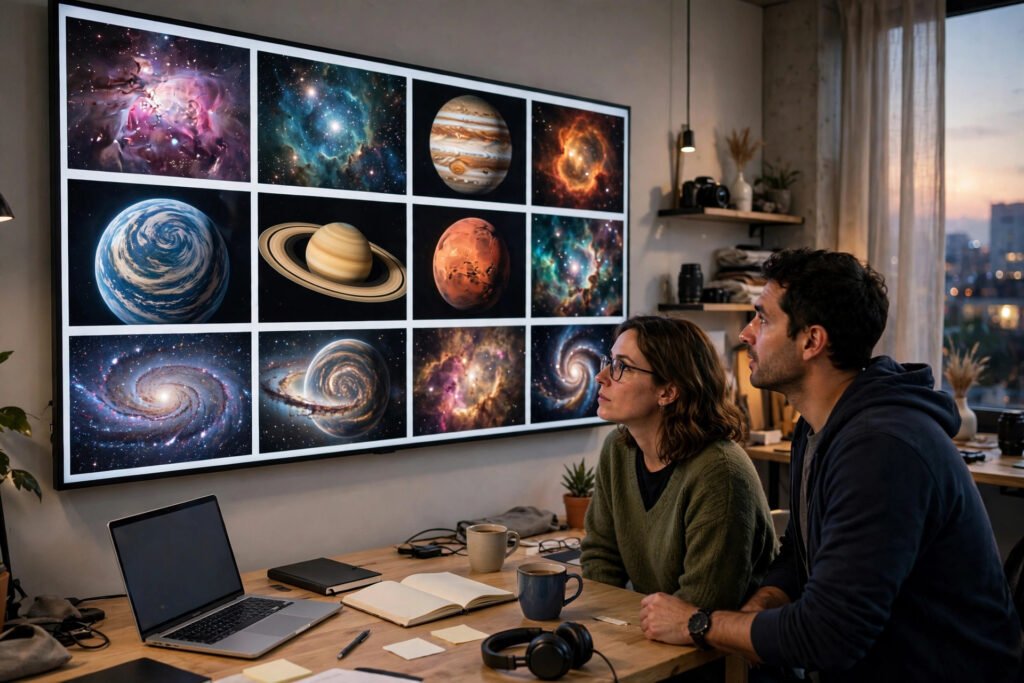
Original visuals matter just as much. Custom animations and diagrams turn a generic montage into a video made for its script. When the narrator says “imagine a star collapsing,” the screen should show that collapse. Channels that reuse the same ten clips across every video look cheap, no matter how good the narration is.
Accuracy and fact-checking
Space audiences include students and amateur astronomers who will happily correct a wrong number in the comments. That is a strength if a channel earns their trust, and a disaster if it does not. Every script should be checked against reputable sources — space agency releases and established reference material — before recording. Numbers deserve special care: distances, temperatures, and timelines are easy to garble and hard to live down.
Voiceover tone
Space narration needs calm authority, not hype. A voice that shouts about every discovery sounds like a trailer, not a guide. The tone that works is measured, curious, and steady. Pacing matters too: complex ideas need pauses, and a script read at full speed exhausts viewers even when the content is excellent. Good voiceover direction builds those pauses in on purpose.
What makes a space channel monetization-safe
No honest provider can promise monetization. YouTube decides that, and any service that guarantees approval should be treated with suspicion. What a good service can do is build a channel the way YouTube’s own policies reward: original, transformative, and clearly adding value beyond the raw material it uses.
Original scripting is the foundation. A script written for the video — with its own structure, angle, and explanation — is very different from a lightly rewritten article read over stock footage. Transformative visuals are the second layer: animations and editing choices that serve the script, rather than a straight dump of unedited NASA footage with music over it. Reused footage dumps are the classic trap in this niche: cheap to produce, impressive for thirty seconds, and exactly the low-effort content that runs into trouble at review time.
Consistency is the third layer. A channel that publishes on a steady rhythm, with a consistent visual style and standard of accuracy, looks like a real publication. A channel with five videos in wildly different styles, followed by silence, does not. If you are hiring a team, ask how they keep style and quality steady across dozens of videos.
For a fuller picture, see our faceless science channel videos service guide and our faceless documentary channel production service page — space sits where those two approaches meet.
Doing it yourself vs hiring a done-for-you team
There is no single right answer here. It depends on your time, your skills, and how seriously you want to treat the channel. This comparison should help you decide honestly.
| Doing it yourself | Done-for-you service | |
|---|---|---|
| Time per video | Many hours across research, scripting, visuals, voiceover, and editing | Your time goes to review and direction, not production |
| Script quality | Strong if you love the subject and can write for narration | Should be researched, fact-checked, and written for retention |
| Visuals | Limited by your tools, footage access, and animation skill | Licensed footage plus custom graphics built around each script |
| Publishing rhythm | Often irregular once real life gets busy | Built around a set schedule with videos delivered on time |
| Cost | Lower cash cost, much higher time cost | Higher cash cost, far lower time cost |
| Biggest risk | Burnout and long gaps between uploads | Picking a provider that cuts corners on scripts or footage |
My honest take: if you enjoy researching space and have evenings free, making a few videos yourself is the best way to learn what good looks like. You will then be a much sharper buyer if you later hire a team. If you want a channel that publishes steadily while you focus elsewhere, a done-for-you service is the realistic route — but only if you check its work properly first.
What Xoomo YouTube Automation delivers
Xoomo YouTube Automation builds faceless channels for clients in the USA, UK, Canada, Australia, and the Netherlands. A faceless space channel from Xoomo is produced as a complete package: researched and fact-checked scripts, professional voiceover, custom visuals and animations, thumbnails, SEO, and ongoing faceless YouTube channel management. You review the direction and the finished videos. The production work sits with the team.
Each long video runs 8 minutes and includes its thumbnail, SEO, and channel management. Our done-for-you faceless YouTube channel service covers the full setup as well, so a new space channel starts with proper branding, structure, and a publishing plan rather than a random first upload.
| Package | What you get | Price |
|---|---|---|
| 5 videos | 5 long videos (8 minutes each), thumbnails, SEO, channel management | $390 |
| 10 videos | 10 long videos (8 minutes each), thumbnails, SEO, channel management | $790 |
| 12 videos | 12 long videos (8 minutes each), thumbnails, SEO, channel management | $890 |
| 15 videos | 15 long videos (8 minutes each), thumbnails, SEO, channel management | $1,099 |
| 20 videos | 20 long videos (8 minutes each), thumbnails, SEO, channel management | $1,499 |
| 25 videos | 25 long videos (8 minutes each), thumbnails, SEO, channel management | $1,899 |
| Monthly | 25 long videos + 10 Shorts | See packages |
See the full details on our packages page, or talk to us directly through our contact page. Client channel — identity protected under NDA.
Who this suits — and who should skip it
A faceless space channel suits you if you are genuinely interested in the subject, you can commit to a steady publishing schedule (or pay a team to keep one), and you are patient enough to let a channel build an audience over time. It suits investors and busy professionals who want a content asset without appearing on camera, and it suits space enthusiasts who love the topic but do not want to be presenters.
It does not suit everyone. If you need fast returns, chase every trending topic regardless of accuracy, or plan to publish reused footage with minimal original work, this niche will disappoint you — and it could put the channel at risk. Space rewards depth and patience.
What to check before you hire any space channel service
Before you pay anyone, ask for sample videos in this niche specifically — not generic samples from other topics. Watch a full video, not just the first minute. Check whether the script teaches you something new, whether the visuals match the narration, and whether sources are handled responsibly. Ask how they source footage, fact-check scripts, and handle revisions. A provider that cannot answer clearly is telling you something.
Also check the basics: clear pricing, a written scope of what each video includes, and a realistic schedule. Vague promises and pressure to buy a large package on the first call are warning signs in any niche.
Frequently asked questions
Do I need to appear on camera for a faceless space channel?
No. That is the whole point of the format. Space videos are built from narration, visuals, animations, and archival material, so no presenter is needed. Your voice is not required either if you use a professional voiceover.
Is NASA footage free to use on YouTube?
Much NASA imagery is in the public domain in the United States, but that does not cover everything a channel might use. Footage from other agencies, private missions, music, and stock clips each have their own terms, so every clip still needs a license check. A careful team keeps a source log for each video.
How many videos does a space channel need before it gains traction?
There is no fixed number, and anyone who quotes one is guessing. What matters more is steady publishing, strong scripts, and videos that keep viewers watching. A channel with a consistent library of quality videos is in a far better position than one with a handful of rushed uploads.
Can a faceless space channel get monetized?
Faceless channels can apply for the YouTube Partner Program like any other channel, but approval is YouTube’s decision and depends on the channel meeting its requirements, including original and policy-compliant content. A service can build a channel to a high standard; it cannot guarantee approval or a timeline for it.
What makes one space channel stand out from the rest?
Original scripts, accurate facts, and visuals made for the story. Most space channels reuse similar footage, so the script is usually the real differentiator. A channel with a clear angle — one mission family, one class of cosmic event, one style of explanation — also stands out faster than a channel trying to cover everything.
How do I start a faceless space channel with Xoomo?
Reach out through Fiverr or WhatsApp below, tell us your angle and goals, and we will talk through the right package and publishing plan. You can also read the full package details on our packages page before you decide.
Ready to launch a space channel that treats the subject properly? Order through Fiverr or message us on WhatsApp and tell us your niche. We will help you pick the package and angle that fit your goals.