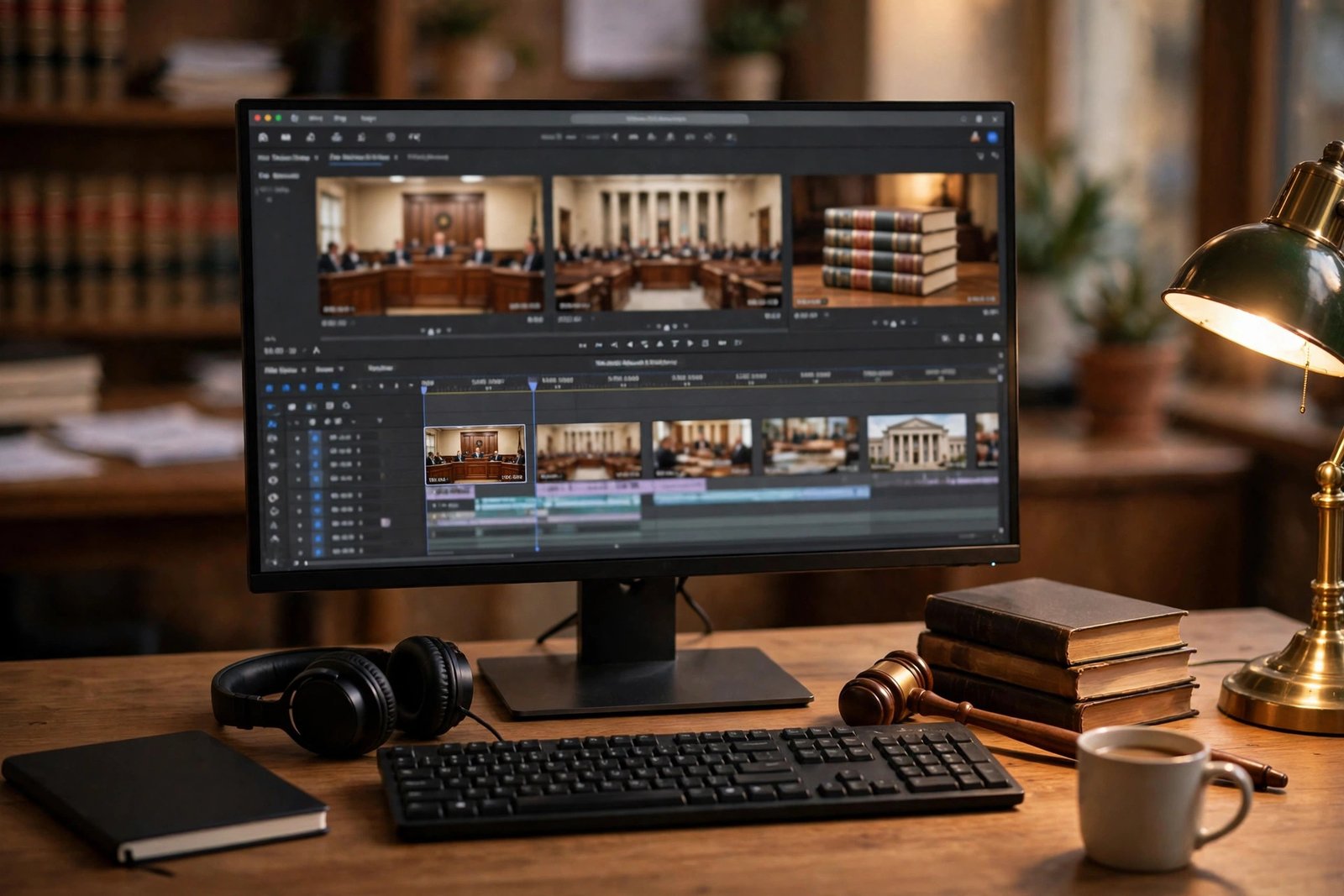
Faceless Law Channel Videos Service (2026): The Honest Production & Service Guide
Law is one of those topics people search for when they actually need an answer — because a landlord just sent a notice, a boss just said something that didn’t sound right, or a contract just landed in their inbox with a clause they don’t understand. That urgency is exactly why a faceless law channel can work so well. The audience arrives with a real question, they stay while you explain it clearly, and they remember the channel that made a confusing subject feel simple.
But law is also a niche where sloppy content does real damage. A wrong claim in a gaming video is embarrassing; a wrong claim in a legal explainer can mislead someone at the worst possible moment. So this guide is honest about both sides: why the niche is strong and what it takes to do it properly. Xoomo YouTube Automation builds faceless law channels for clients in the USA, UK, Canada, Australia, and the Netherlands, and we fact-check every script before a single frame is rendered.

Why Law Is a Strong Faceless Niche
Most faceless niches live or die on entertainment value. Law is different. Its strength comes from search intent. People type plain questions into YouTube and Google — “can my landlord do this,” “what happens if I don’t sign,” “do I need a lawyer for this” — and they want a straight answer in plain language. That demand doesn’t fade with trends, because the questions are evergreen: tenancy rules, workplace rights, and basic contract terms don’t go out of fashion.
Advertisers value this audience too. Legal services, insurance, and financial products compete hard for attention, which is why legal and tax education content shows up in creator-economy lists as a high-value vertical. Vendor estimates from OutlierKit put legal and tax education content in a $15–$40 CPM range — treat that as a vendor estimate, not YouTube data, but the direction is clear: advertisers pay to reach people who are thinking about legal decisions. A channel that answers those questions well sits in front of a commercially valuable audience.
Then there’s the format advantage. Law doesn’t need a face on camera. It needs a clear voice, clean visuals, and a script that respects the viewer’s intelligence. Diagrams, timelines, and document close-ups explain a contract clause far better than a talking head. No presenter means no on-camera talent to hire, no studio, and no personality bottleneck — the channel’s value lives in the quality of its explanations.
The Formats That Work
The channels that grow pick a few formats and get very good at them. Here are the ones worth building a channel around.
Plain-Language Explainers
The backbone of the niche. One legal concept, explained the way you’d explain it to a friend: what it means, who it applies to, and what to watch out for. “What is a non-compete clause, really?” or “Your rights when a flight is cancelled.” These videos age well, rank in search, and build a library that compounds over time. The skill is in the simplification — cutting jargon without cutting accuracy.
Tenant Rights and Housing Guides
Renting touches almost everyone, and tenants search constantly: deposits, eviction notices, repairs the landlord won’t make, breaking a lease early. These guides pull strong search traffic because the viewer has a deadline and a real problem. They also need care with jurisdiction — tenant law in Texas is not tenant law in London.
Personal Injury Basics
What to do after a car accident, how injury claims actually work, what “no win, no fee” means in practice. These topics carry high advertiser value and high viewer intent, but they also carry the highest responsibility. Every claim must be checked, every video must carry a clear “this is general information, not legal advice” disclaimer.
Contract Explainers
Employment contracts, freelance agreements, NDAs, terms of service — documents people sign every day without fully reading. A channel that walks through a real contract clause by clause, in plain English, earns trust fast. Highlighting the actual clause on screen while the voiceover explains it beats a wall of text.
Employment Law Basics
Wrongful termination, overtime rules, workplace discrimination, notice periods. These videos reach people at stressful moments, so tone matters as much as facts. Calm, clear, and honest beats dramatic every time. And again, jurisdiction is everything — US employment law and UK employment law are different systems, and mixing them up is the fastest way to lose credibility.
“Weird Laws” Explainers
The lighter side of the niche: strange old laws, surprising rules, and legal oddities that make great Shorts and discovery content. These pull in viewers who would never search for tenant rights, then keep them around for the serious stuff. The trap is accuracy — half the “dumb laws” circulating online are myths, so each one needs checking against a real source first.
Case-Story Breakdowns
Famous cases and disputes, retold as stories with the legal reasoning explained along the way. This is adjacent to true crime but it isn’t the same thing — the focus is the law and the outcome, not the crime itself. Done well, these are the channel’s most shareable long-form videos. Stick to what’s on the record.
Accuracy Is the Whole Game
A law channel lives or dies on whether viewers can trust it. One video with a wrong claim — a misstated deadline, a rule that doesn’t apply in the viewer’s state, a “fact” pulled from a random forum — and the comments will tear it apart. Worse, someone might act on it. Accuracy isn’t a nice-to-have in this niche. It’s the product.
A serious workflow has a few non-negotiable steps. First, scripts are written from real sources — statutes, official government guidance, court records, and reputable legal information sites — never from another YouTube video or a social media post. Second, every factual claim gets checked before recording: dates, thresholds, and definitions verified, not assumed. Third, the channel picks one jurisdiction and stays there. If you want to cover two, run two clearly labeled playlists — or two channels.
Every video carries a disclaimer, spoken and on screen: this is general information for educational purposes, not legal advice, and viewers should consult a qualified lawyer for their own situation. That disclaimer protects the viewer and the channel, and it signals to the audience that the creator takes the subject seriously.
One more thing worth saying plainly: we don’t give legal advice in this article, and a production service shouldn’t pretend to be a law firm. What a service can do is research carefully, write clearly, check its sources, and flag anything uncertain rather than smoothing it over. That’s the standard we hold ourselves to at Xoomo.
What Xoomo Delivers for a Law Channel
When you order a faceless law channel videos service from Xoomo YouTube Automation, you’re buying a complete production pipeline, not a single video file. Each long video is 8 minutes and comes with a fact-checked script, professional voiceover, visuals and motion graphics, a custom thumbnail, SEO, and ongoing channel management. The monthly option covers 25 long videos plus 10 Shorts — enough to publish nearly daily and build a searchable library fast.
The part clients notice most is the script process. Law scripts go through a research and review pass before voiceover is recorded, with sources noted and claims checked. If a claim can’t be verified, it doesn’t go in the video — and it’s the reason the channel holds up when viewers start fact-checking in the comments, which they will.
Channel management is included too: uploads, scheduling, playlists, and the small ongoing decisions that keep a channel consistent. The full process is on our done-for-you faceless YouTube channel service and faceless YouTube channel management pages, and our hire a faceless YouTube team page covers building a small team around the channel. All package options are on the packages page.
DIY vs Done-for-You: An Honest Comparison
You can absolutely build a law channel yourself — plenty of creators do. The question is whether your time is better spent researching scripts and editing video, or steering the channel’s direction while a team handles production. Here’s how the two routes stack up.
| DIY | Done-for-you (Xoomo) | |
|---|---|---|
| Script research & fact-checking | You do it all — hours per video | Researched, checked scripts included |
| Voiceover | Your voice or hired talent | Professional voiceover included |
| Editing & visuals | You edit, or learn as you go | Edited visuals, motion graphics, thumbnail |
| SEO & publishing | You write titles, tags, descriptions | SEO and channel management included |
| Consistency | Depends on your free time | Regular output on a set schedule |
| Cost | Your time (plus tools) | From $78.00 per video (5-video package) |
| Best for | Creators who enjoy production | Owners who want a channel run for them |
DIY wins if you genuinely enjoy production and have the hours to spare. A service wins if you want consistent output without becoming a full-time editor and researcher. Law content punishes inconsistency — a channel that posts three videos and goes quiet for a month looks abandoned, and viewers with urgent questions don’t subscribe to abandoned channels.
Who This Suits — and Who It Doesn’t
A faceless law channel suits you if you want a serious, evergreen asset and you’re comfortable with a slower, trust-first build. It suits law firms and legal professionals who want an educational presence without appearing on camera, and entrepreneurs who see the value in a high-intent audience and are willing to invest in quality scripts rather than chasing viral shortcuts. It also suits anyone who likes a library that keeps working for years, because the questions it answers don’t expire.
It doesn’t suit everyone. If you want overnight viral growth, pick a different niche — law builds steadily through search, not sudden spikes. If you want to give personal legal opinions or comment on live cases, that’s a different kind of channel with different risks. And if accuracy feels like a burden rather than the point, this niche will frustrate you. The channels that win here treat getting it right as the whole job.
Xoomo Packages for Law Channels
Every package includes 8-minute long videos with script, voiceover, visuals, thumbnail, SEO, and channel management. The monthly plan adds 10 Shorts alongside 25 long videos — Shorts suit “weird laws” explainers and quick legal facts that pull new viewers into the long-form library. One honest note: the per-video price doesn’t fall in a straight line. The 10-video package works out to $79.00 per video, slightly above the 5-video package at $78.00, while the larger packages bring the average back down. Pick the package that matches how fast you want to publish, not just the lowest per-video number.
| Package | Price | Per video |
|---|---|---|
| 5 videos | $390 | $78.00 |
| 10 videos | $790 | $79.00 |
| 12 videos | $890 | $74.17 |
| 15 videos | $1,099 | $73.27 |
| 20 videos | $1,499 | $74.95 |
| 25 videos | $1,899 | $75.96 |
| Monthly (25 long + 10 Shorts) | See packages page | — |
Client channel — identity protected under NDA. We don’t publish client results or traffic figures, and we don’t promise how fast a channel will grow. What we can promise is the work itself: researched scripts, careful production, and a channel managed properly from day one.

Start Your Faceless Law Channel
If a law channel sounds like the right fit, the next step is simple. Order on Fiverr or message us on WhatsApp and tell us your niche — we’ll talk through the jurisdiction, the formats, and the publishing pace that makes sense for your goals. You can also reach us through our contact page.
Order on Fiverr Chat on WhatsApp
Frequently Asked Questions
Can a faceless law channel get monetized?
Yes. Faceless channels are eligible for the YouTube Partner Program like any other channel, as long as they meet the thresholds — 1,000 subscribers and 4,000 watch hours, or 10 million Shorts views — and follow YouTube’s policies. Since July 15, 2025, YouTube’s “repetitious content” rule is called “inauthentic content,” and it’s a qualitative check: original, useful videos pass; mass-produced, low-effort repetition doesn’t. Researched scripts with real explanations are exactly what the policy is designed to allow.
Do law videos need a lawyer to make them?
No — a law explainer channel is an education channel, not a law practice. But the scripts must be researched from reliable sources and fact-checked, and every video should carry a clear “not legal advice” disclaimer. A production team that checks its sources and flags uncertainty is doing the job properly; a channel that presents guesses as facts is not.
Which jurisdiction should my channel cover?
Pick one and stay consistent — US law or UK law, for example. The two systems differ on tenancy, employment, and injury claims, and mixing them confuses viewers and invites errors. If you want to cover both, keep them in clearly labeled separate playlists so viewers always know which system a video is about.
What kind of law videos get the most views?
Plain-language explainers of everyday problems — tenant rights, workplace issues, contracts, and personal injury basics — bring steady search traffic because people look them up when they need answers. “Weird laws” explainers and case-story breakdowns bring discovery traffic and shares. A healthy channel mixes both: searchable guides for the library, shareable stories for growth.
How much does a faceless law channel videos service cost?
Xoomo packages start at $390 for 5 videos ($78.00 per video) and go up to $1,899 for 25 videos ($75.96 per video). Each long video is 8 minutes and includes a fact-checked script, voiceover, visuals, thumbnail, SEO, and channel management. A monthly plan with 25 long videos and 10 Shorts is also available — see the packages page for current details.
Is a law channel a good niche for beginners?
It’s a strong niche, but not the easiest first channel. The audience rewards accuracy and consistency, and the research takes real effort — more than a niche where you can improvise. If you’re willing to invest in good scripts and publish regularly, the evergreen demand and high advertiser value make it one of the more durable faceless niches. If you want something faster and lighter, start elsewhere and come back to law once you have a production routine.