Best YouTube Automation Agency for Travel Channels (2026)
Travel is the faceless niche where the footage does half the talking — and that is what makes it easy to get wrong. A finance video with a weak line costs you a viewer. A travel video with the wrong footage, a made-up fact, or a bored voice costs you trust — and trust is the whole product in travel.
Hiring an agency for a travel channel is different from hiring one for motivation or gaming. You are trusting a team with facts about real places, footage that must match the script, and reused-content rules most faceless niches never touch. The agency you pick decides whether your channel reads as a genuine travel guide or as another slideshow of stock clips.
This guide is the buyer guide, not the service page. Our travel channel production service page explains what Xoomo produces; this guide explains how to choose any agency, what to check before you sign, what it costs, and the red flags. Our choosing-between-agencies guide and our small-business buyer guide use the same honest approach, with the extra checks this niche demands.
Why Travel Is Different From Every Other Faceless Niche
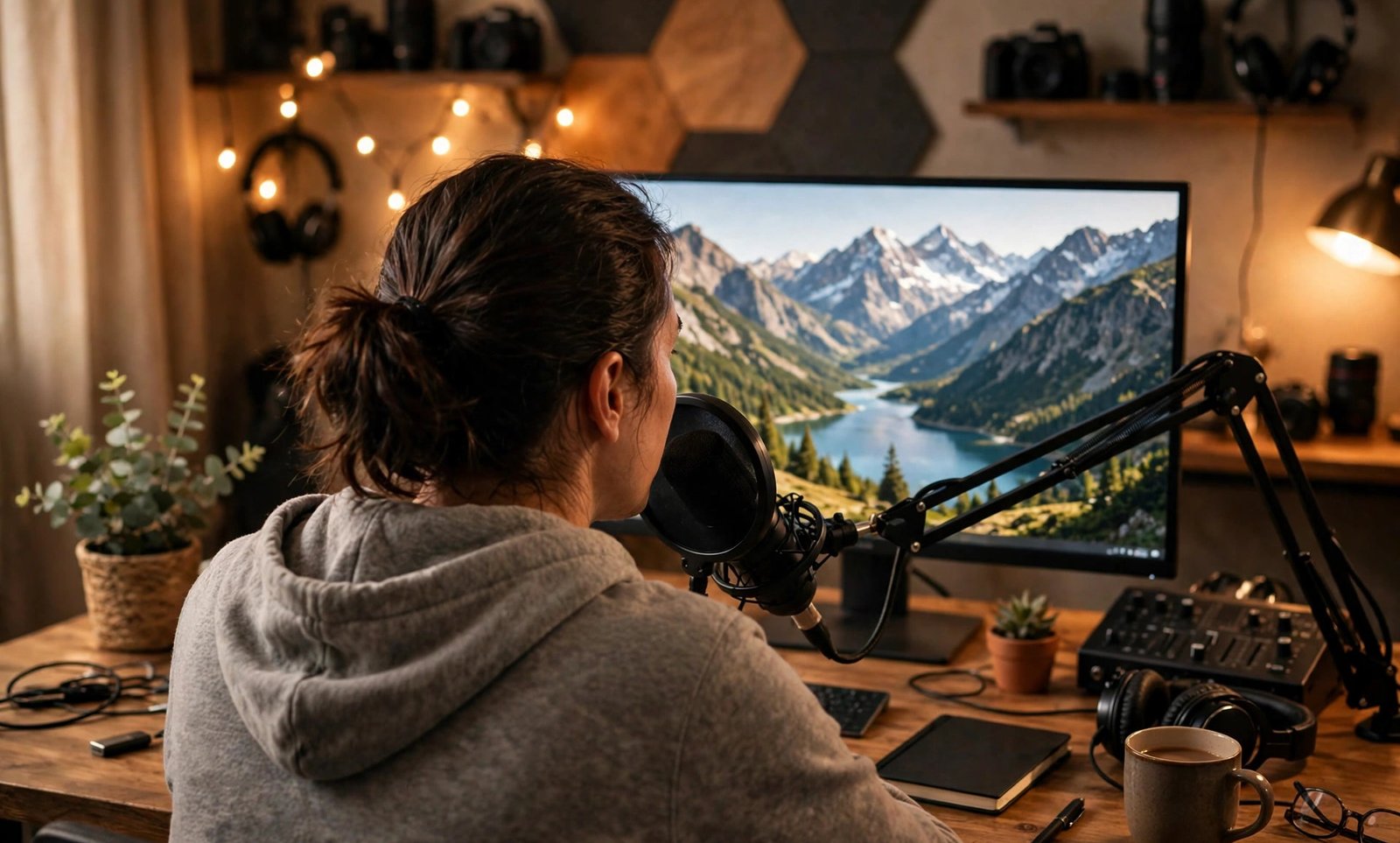
Travel is a visual promise. Viewers click because they want to feel a place — the light on a Lisbon street, the noise of a Bangkok market, the scale of a canyon at dawn. The footage has to carry the feeling, and the footage has to be honest: the place on screen should be the place in the script. That is a production problem no other faceless niche has in the same way. A history channel can use a painting; a finance channel can use a chart. A travel channel that shows the wrong city has lied, even if the script is perfect.
The second difference is facts. Travel videos are full of checkable claims: entry fees, opening hours, best months to visit, visa rules, distances, prices. A viewer planning a real trip will check them, and a wrong price or a closed attraction will show up in the comments within hours. An agency that treats travel like any other cash-cow niche will build a channel that looks wrong to the exact audience it needs to win.
What a Great Travel Agency Does Differently
Five things set it apart — ask about each one before you sign.
1. Footage that matches the place it shows
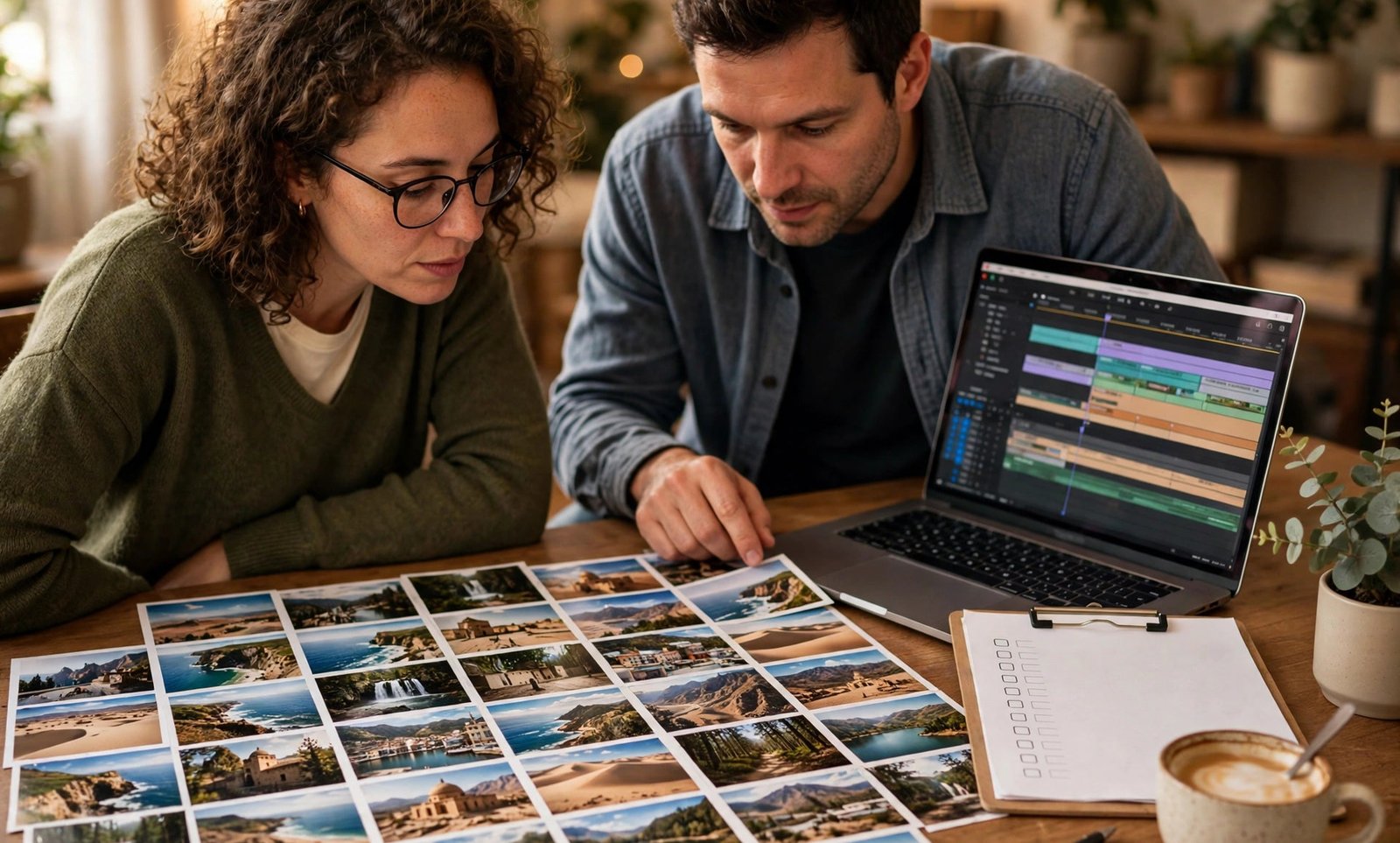
Every clip in a travel video is a claim about a real place. A good agency sources licensed footage for the exact destination — not a generic beach clip, not a landmark from the wrong country. Ask how the team checks footage against the narration, and what happens when the right clip does not exist. If the answer is “we use whatever stock we have,” the channel will show viewers a place it is not talking about.
2. Fact-checking on real places
Travel scripts are full of numbers that change: ticket prices, opening hours, seasonal closures, visa rules. A good team checks every video’s facts against current sources before recording, and updates scripts when the facts change. Ask to see the sources behind one finished video. If the research step is a search engine and a hope, your viewers will do the fact-checking for you — in public.
3. Narration that makes you feel the place
In travel, the voice is the tour guide. A warm, steady read pulls the viewer into the place; a flat read turns a destination film into a slideshow. Listen to a full episode, not a 30-second sample. Ask which voice will narrate your videos, and if you can hear it on a finished travel video first. If the voice sounds bored, your audience will feel bored.
4. Licensing and reused-content safety built in
Travel channels live on stock footage, and that is where the risk sits. Licensed footage is fine — scraped footage from other creators is not, and the same licensed clip used by fifty channels with the same script is a template, not a video. A good agency can tell you where every clip came from, what license covers it, and how the script, narration, and edit add original value. If nobody owns the licensing check, the channel is one policy review away from trouble.
5. Thumbnails and titles that never fake the trip
A travel thumbnail is a promise about a place. A good agency builds thumbnails from the actual destination — real imagery, honest place names, no bait. It never claims the channel visited a place it did not, and never uses a famous landmark to sell a video about somewhere else. Ask how the team picks thumbnail images. If the answer is “whatever gets clicks,” the channel will earn clicks it cannot keep.
YouTube Policy: Stock Footage, Reused Content, and the Travel Trap
YouTube’s channel monetization policies say reused content means channels that repurpose content already on YouTube or another online source without adding significant original commentary, substantive modifications, or educational or entertainment value — and that channels can be rejected or suspended from the YouTube Partner Program over it. The same page says content should be original and authentic, not mass-produced, generic, or repetitive. In July 2025 YouTube renamed its “repetitious content” policy to “inauthentic content” to cover repetitive or mass-produced uploads. Travel is where those lines bite hardest, because the whole format is built on footage the channel did not shoot.
That does not mean stock footage is banned — licensed footage with an original script, real narration, and a thoughtful edit is a legitimate video. The risk is the shortcut version: the same licensed clips, the same list script, the same flat voice, repeated across dozens of videos. Confirm the current rules in YouTube’s Help Center yourself before you sign; policies change.
Agency vs Freelancer vs DIY Tools vs Doing It Yourself
Four routes can produce a travel channel. The table compares them on what matters most here.
| Full-Service Agency | Freelance Editor | DIY AI Tools | Doing It Yourself | |
|---|---|---|---|---|
| Footage licensing | Team sources and licenses every clip | You supply the footage or the license | Stock library included, same clips as everyone | You find and license it all |
| Fact-checking | Checked against current sources before recording | Depends on the writer you hire | No checking — the tool cannot verify facts | As good as your own research |
| Narration quality | Warm, directed voice matched to travel | You supply the voiceover | Flat AI read, little direction | Your voice and your time |
| Thumbnail and title craft | Honest destination imagery, place names in titles | Not the editor’s job | Template output, often clickbait | Entirely on you |
| Seasonal planning | Planned months ahead — summer guides go out in spring | Only if you brief it | No planning at all | Stops when life gets busy |
| Upload consistency | Fixed schedule, team delivers | Depends on one person’s availability | Fast, but quality drops off | Stops when life gets busy |
| What you manage | Direction and approvals | Script, research, uploads, SEO | Everything except the edit | Everything |
| Best for | Owners who want a channel, not a hobby | Owners with footage and a script ready | Testing an idea cheaply | Owners with time and travel knowledge |
In travel, the rows that matter most — footage licensing, fact-checking, and seasonal planning — are exactly the rows a freelance editor and a DIY tool do not cover. That is why an agency costs more: you pay for the parts of the job that keep the channel honest and monetizable.
What It Costs in 2026
Travel costs more to produce well than most faceless formats, because licensed footage and fact-checking are real work. The prices below come from the publishers named, as observed on 2026-11-26 — check the live pages before you budget.
One travel-video editing service lists $250 for a test project, $450 for a story-driven video, and from $795 for a signature travel story, with monthly partnerships at $900 for two videos and $1,650 for four — but it edits footage the client supplies, so it is editing, not full automation. A done-for-you agency lists a single 10–15 minute video from $49, a $99 starter package, and bundles of $499 for 10 and $699 for 15. One done-for-you service lists Travel & Experiences among its niches and publishes no price. A general automation agency lists an Essential plan at $499. Freelance travel-video gig pages list editing-only tiers from about $10 to $150 per project. A DIY AI video studio lists plans from $49 a month. Done-for-you per-video plans land roughly between $47 and $129 per video; travel-specific editing runs from about $250 to $795 per video.
At Xoomo YouTube Automation, pricing is public and fixed. No quote, no discovery call, no “it depends” — the packages are below, with the per-video math shown.
| Package | Price | Per Video |
|---|---|---|
| 5 videos | $390 | $78.00 |
| 10 videos | $790 | $79.00 |
| 12 videos | $890 | $74.17 |
| 15 videos | $1,099 | $73.27 |
| 20 videos | $1,499 | $74.95 |
| 25 videos | $1,899 | $75.96 |
Each long video runs 8 minutes and includes a thumbnail, SEO, and channel management. Our monthly service covers 25 long videos plus 10 Shorts. One honest note: the 10-video package at $79.00 per video costs slightly more per video than the 5-video package at $78.00. The best per-video value is the 15-video package at $73.27. The 20- and 25-video packages cost a little more per video than the 15 — $74.95 and $75.96 — because they include more management and Shorts volume. See the full breakdown on our packages page. We never publish client results or channel names — any client channel is described only as “Client channel — identity protected under NDA.”
How to Vet an Agency for Travel
Use this checklist on every sales call: an agency that passes all ten is rare, and one that fails the first three is not worth a fourth question. Our hire a faceless YouTube team guide covers the general version; these ten are the travel version.
- Show me a travel video where the footage matches the place in the script.
- Where does your footage come from, and what license covers it?
- How do you fact-check prices, hours, and visa rules before recording?
- Let me hear the narrator on a finished travel video.
- Show me how a thumbnail and title stay honest about the destination.
- How do you plan around seasons?
- What happens when the right footage for a place does not exist?
- Who owns the channel, the videos, and the scripts? (The answer must be: you.)
- What exactly is delivered each month?
- Will you put the deliverables and the ownership terms in writing?
Red Flags That Should End the Call
Some warning signs are the same in every niche: guaranteed views or income, a promised monetization date, or a team that will not show real work. In travel, the list is longer. If an agency shows you a “travel” video built from clips of the wrong city, cannot say where its footage is licensed from, claims it visited places it clearly did not, or laughs off fact-checking as “the editor’s job,” end the call. A team that treats footage and facts as decoration will ship a video that gets the channel a strike — or a comment section full of corrections.
Watch for the same pattern in pricing. A price far below the market ranges above usually means the footage is scraped or the fact-checking was skipped. In travel, licensed footage and checked facts are the product. Paying less for a video built on stolen clips is not a bargain. And if the portfolio looks like a slideshow — same clips, same script shape, same flat voice across every destination — that is not a travel agency.
The Short Answer
The best YouTube automation agency for a travel channel treats footage and facts as the product, not as steps to skip. Licensed clips that match the place, checked facts, a narrator who makes you feel the place, honest thumbnails, and reused-content safety in every video — that is the whole job. If an agency can show you that discipline in real work, the price is a detail. If it cannot, no price is low enough.
Frequently Asked Questions
Is travel a good niche for a faceless YouTube channel?
Yes — travel is one of the most visual faceless niches, and audiences search for destination guides all year round. But it is also one of the most demanding: every video needs licensed footage that matches the place, checked facts, and a voice that carries the feeling of being there. It suits owners who want a long-term channel and are willing to pay for proper production, not owners looking for the cheapest videos.
How much does a travel YouTube automation agency cost?
Xoomo’s packages run from $390 for 5 videos to $1,899 for 25 videos, with each long video running 8 minutes and including a thumbnail, SEO, and channel management. Third-party plans observed on 2026-11-26 ranged from about $47 to $129 per video for done-for-you plans, while travel-specific editing ran from $250 to $795 per video. Check the live pages before you budget.
Can a travel channel get monetized?
Yes — travel channels monetize when the content is original and compliant. YouTube’s reused-content policy can reject or suspend channels that repurpose content without adding significant original commentary, substantive modifications, or educational or entertainment value, and its rules exclude mass-produced or repetitive uploads. Licensed footage with an original script, real narration, and a thoughtful edit is on much firmer ground than a template slideshow. No agency can guarantee a monetization date, and you should confirm the current rules in YouTube’s Help Center yourself.
What should I ask an agency before hiring for a travel channel?
Ask where the footage comes from and what license covers it, how facts about places are checked before recording, if you can hear the narrator on a finished travel video, how thumbnails stay honest about the destination, and how seasonal planning works. Then ask who owns the channel and if the deliverables go in writing. The ten-question checklist above covers all of it — use it on every sales call.
Do travel videos need original footage, or is stock footage enough?
Stock footage is enough when it is properly licensed and the video adds original value on top of it — a researched script, real narration, and an edit built around the place. What is not enough is the same licensed clips with the same script shape repeated across dozens of videos, or footage scraped from other creators. Ask any agency to show you where its clips come from before you sign.
How is this buyer guide different from Xoomo’s travel service page?
The service page explains what Xoomo produces for travel channels — the deliverables, the process, and the packages. This buyer guide explains how to choose any agency, including Xoomo: the vetting checks, the red flags, the costs, and the policy rules. Read the guide first, then judge the service page against it.
Ready to start a travel channel done right? Xoomo builds and manages done-for-you faceless YouTube channels for clients in the USA, UK, Canada, Australia, and the Netherlands. Tell us your niche and we will tell you honestly if we can help — and if another route would serve you better, we will say so. Our faceless YouTube channel management covers the ongoing side once the channel is live — reach us through our contact page.