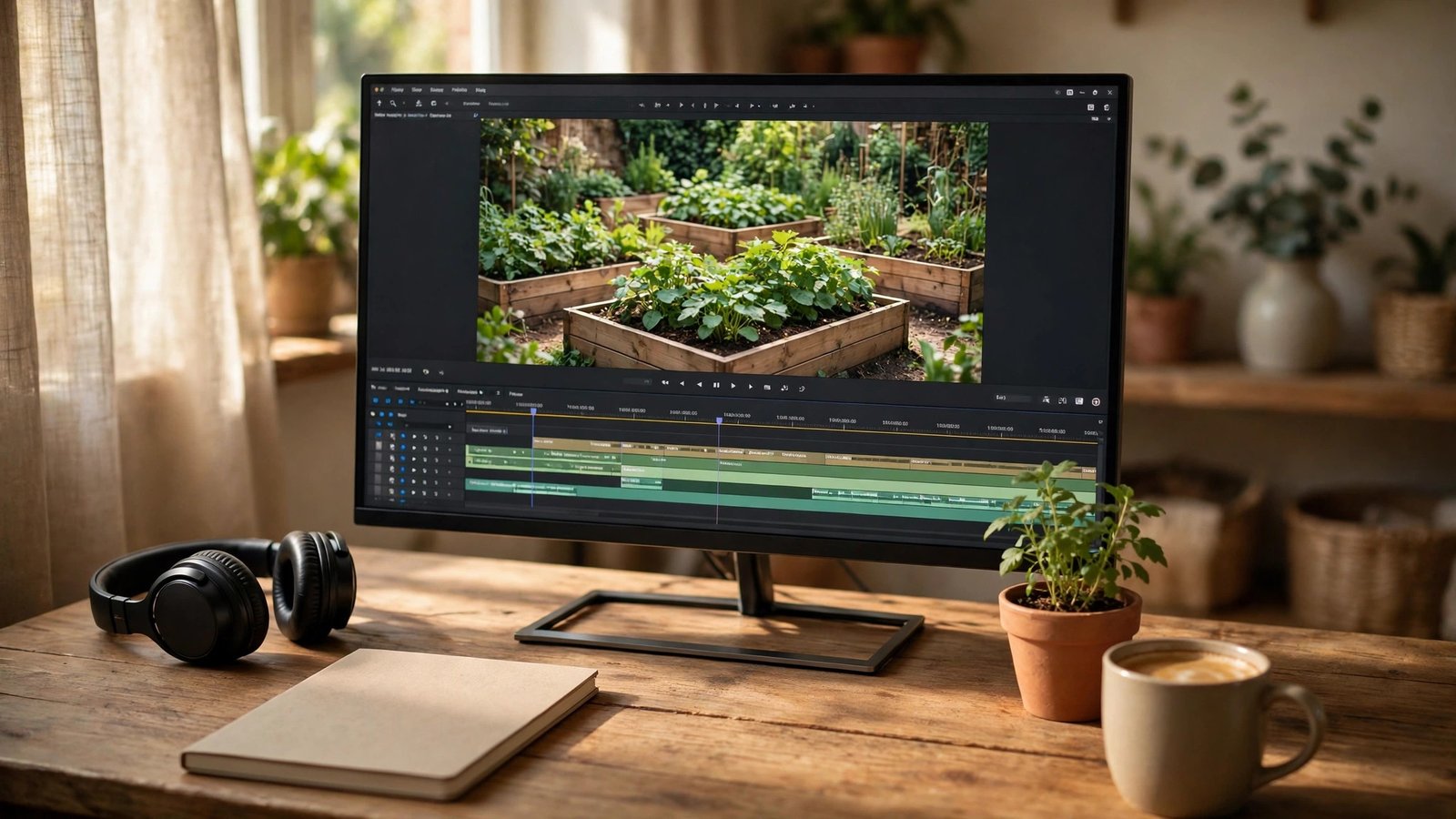
Faceless Gardening Channel Videos Service (2026)
Some niches fight the camera. Gardening doesn’t. The plant is the star, the soil is the set, and the hands doing the work are all the audience needs to see. That is why a faceless gardening channel videos service makes sense — and why it still needs more care than most faceless formats. Viewers trust what they can watch grow: a timelapse of a tomato going from seedling to harvest is proof in a way a slideshow never is. This guide covers what the service does, which formats work, what it costs, and how to spot a provider building a real channel.
I watch this niche closely because it breaks a common assumption: that the easiest faceless niches need no filming at all. Gardening rewards real footage, real seasons and real patience — none of which requires your face. It does require a plan, a garden to film in, and someone who knows when to plant what. A done-for-you service handles the filming, scripts, editing, thumbnails and schedule while you own the channel.
Why gardening works so well without a face
Ask any list of faceless channel ideas and gardening shows up on nearly all of them. vidIQ calls it “naturally suited to faceless YouTube because the plants are the subject.” The demand is real: independent directories tracking public subscriber counts put Epic Gardening at about 4.1 million, DIY Garden Ideas at roughly 2.7 million, The Gardening Channel With James Prigioni at about 1.9 million, and MIgardener at about 1.4 million. One directory that searched YouTube across the US, UK, Canada and Australia found 121 gardening channels with 50,000 or more subscribers.
Three things make the niche friendly to faceless video. First, the content is evergreen and seasonal at once. “How to prune roses” gets searched every year, and “what to plant in March” gets searched every March. Second, the audience is practical — people watch because they have a problem, like yellow leaves or aphids, and want a fix they can copy. Third, the audience tends to be homeowners who spend on tools, seeds and raised beds, which makes the niche attractive to advertisers and garden-product affiliates. I will not quote earnings figures here. Nobody can promise you a number.
There is one catch, and an honest service will say it up front: gardening works best when something real is growing on screen. Pure animation and stock footage can carry an explainer, but they cannot carry a whole channel. The strongest gardening channels mix real hands-in-soil footage with the faster formats.
The 4 formats that actually work
Not every faceless format fits gardening. Slideshows with a voice reading a blog post will not survive YouTube’s originality checks. These four do the heavy lifting.
1. Hands-only filming
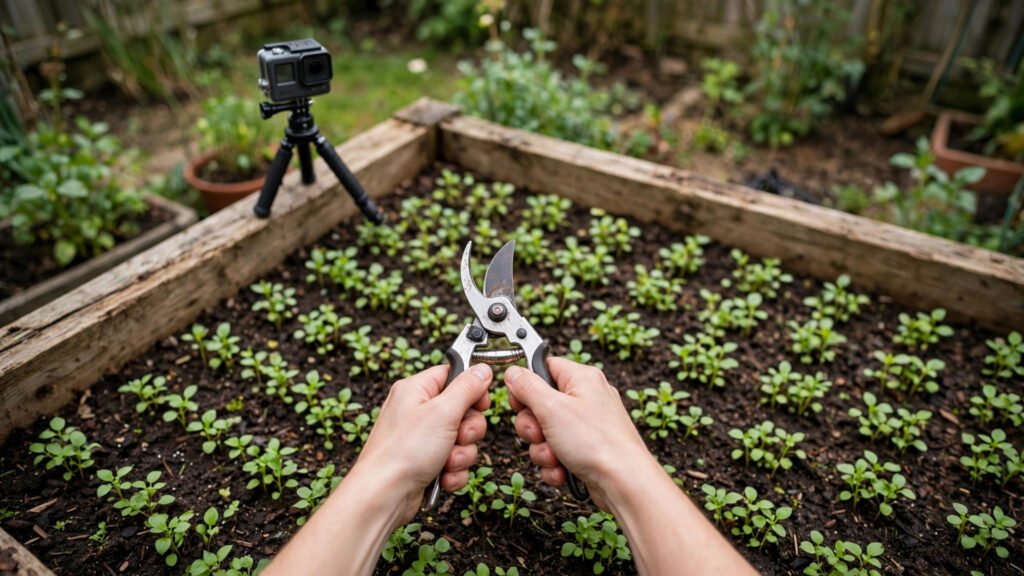
This is the workhorse. An overhead camera films hands sowing seeds, pruning, transplanting seedlings and harvesting vegetables. The viewer never sees a face, and never needs to. The work is visible — soil under fingernails, a clean cut on a stem, a basket filling with beans. It needs a real garden to film in: your own, a rented plot, or a partner grower’s space, and filming planned around the season. You cannot fake a harvest in January. When a service offers hands-only filming, ask where the garden is.
2. Animated explainers
Some gardening knowledge does not film well. Soil chemistry, a pest’s life cycle, how roots spread underground — a camera cannot show any of that. Animation can. Short animated explainers sit well beside the hands-on content, and they can be made in winter, when nothing is growing outside. A channel that pairs hands-only tutorials in the growing season with animated explainers in the quiet months never goes dark.
3. Voiceover with stock footage
This is the fastest format to produce, and the easiest to get wrong. A scripted voiceover over licensed stock clips of gardens and greenhouses can look polished. The risk is originality: YouTube’s monetization policies reject reused content and mass-produced videos that add little of their own. A channel built entirely from stock clips with a generic voiceover is the classic rejection case. Use stock as a supporting ingredient — B-roll inside a video with original filming and an original script. If a provider’s whole offer is stock plus voiceover, walk away.
4. Seasonal series
The most watchable format is also the simplest: follow one crop from seed to harvest. Plant the tomatoes in episode one, stake them in episode three, pick the first ripe fruit in episode eight. Viewers subscribe to see how the story ends. The same arc works for a raised-bed build, a balcony garden or a full allotment year. Series need planning months ahead — sowing, filming and upload dates tied to the real calendar. That planning is exactly what a good service brings.
The honest part: where real footage is still needed
Here is the part some providers will not say out loud. A faceless gardening channel is not a zero-filming channel. Timelapse growth shots, before-and-after transformations and hands-on demos all need a real garden and a real camera. Stock can cover a greenhouse B-roll shot. It cannot show your tomato plant growing.
So how does a done-for-you service handle it? At Xoomo YouTube Automation, we plan hands-only shoots around the season and the content calendar, so the footage exists before the script needs it. Where a client’s own garden is available, we build the filming plan around it. Where it is not, we use partner growing space and licensed stock for the shots that do not need to be original, and animation for the science a camera cannot show. The rule is simple: anything the viewer is asked to trust — a result, a transformation, a harvest — gets real footage.
If you are comparing providers, ask this first: “Show me how you get your footage.” A straight answer names a garden, a filming schedule and a mix of formats. A vague answer means the footage comes from a stock library.
Doing it yourself vs hiring a faceless gardening channel service
Gardening is one of the few faceless niches where doing it yourself is genuinely possible — if you have a garden, a camera and a lot of free weekends. The trade-off is time. One 8-minute video takes a script, a filming session, an edit, a thumbnail, SEO and an upload. Do that two or three times a week for a year and you have a second job.
| What it takes | Doing it yourself | Done-for-you service (Xoomo) |
|---|---|---|
| Time per video | 6–10 hours of your week | About 30 minutes: one review call or message |
| Filming | Your garden, your camera, your weekends | Hands-only shoots planned around the season |
| Scripting and research | You research every topic yourself | Original scripts written for each video |
| Editing, thumbnail, SEO | You learn editing software or pay per video | Included in every video |
| Seasonal planning | Easy to fall behind the calendar | Content calendar built months ahead |
| Consistency | Breaks when life gets busy | Steady publishing schedule, managed for you |
| Upfront cost | Your time, plus gear | Fixed package price, no gear needed |
Neither path is wrong. If you love gardening and have the hours, filming your own channel is rewarding. But if your goal is a channel that publishes on schedule while you run a business or a job, the service route is the practical one. The deciding factor is rarely money. It is whether you are still uploading in month six. Most solo channels are not. Our done-for-you faceless YouTube channel service covers the whole pipeline, and our faceless YouTube channel management keeps the schedule, SEO and analytics on track.
How Xoomo builds your gardening channel: 7 steps
Step 1: Niche call and angle
We start with a call about your angle — vegetables, houseplants, balcony gardens, organic methods, garden design. Each has a different audience and video style. We pick the angle with the clearest demand and the least crowded corner.
Step 2: Seasonal content calendar
We map topics months ahead: spring sowing guides before spring, harvest videos before harvest, winter prep before the frost — so each video lands in the week viewers search for it.
Step 3: Script and research
Every video gets an original script built from real gardening knowledge: planting depths, spacing, watering schedules, common mistakes. No rewritten articles, no spun text. Original scripting keeps the channel clear of YouTube’s reused-content rules.
Step 4: Footage plan
We decide what gets filmed, what gets animated and what uses licensed stock. Hands-only shoots are booked around the season, timelapse shots are set up weeks ahead, and animation covers the science the camera cannot show.
Step 5: Edit, voiceover and thumbnail
The footage becomes an 8-minute video with a clean voiceover, tight editing and a thumbnail built to stand out in search. In a feed full of green leaves, the thumbnail with a clear subject and a readable hook gets the click.
Step 6: SEO, upload and scheduling
Each video gets a researched title, description and tags, then goes up on a steady schedule. Consistency is the single biggest difference between channels that grow and channels that stall.
Step 7: Channel management and monthly review
We watch what is working — which topics pull views, which thumbnails get clicks, where viewers drop off — and adjust the next month’s calendar around it. You get a plain-English summary. We run channels this way for clients who prefer to stay private. Client channel — identity protected under NDA.
Packages and pricing
Every package includes 8-minute long videos with thumbnail, SEO and channel management. Our monthly plan is 25 long videos plus 10 Shorts. Pick a size that fits your budget and pace — a smaller package is a fine way to start, and you can scale up once the channel finds its rhythm. One honest note: the 10-video package works out to $79.00 per video, slightly more than the 5-video package at $78.00. The best per-video value is the 15-video package at $73.27. We would rather show you the real numbers than hide them.
| Package | Long videos | Price | Price per video |
|---|---|---|---|
| Starter | 5 videos | $390 | $78.00 |
| Growth | 10 videos | $790 | $79.00 |
| Growth Plus | 12 videos | $890 | $74.17 |
| Creator | 15 videos | $1,099 | $73.27 |
| Pro | 20 videos | $1,499 | $74.95 |
| Studio | 25 videos | $1,899 | $75.96 |
See the full breakdown on our packages page. If your niche sits close to gardening — nature, outdoor living, homesteading — the same production setup applies. Our faceless nature channel videos service and faceless cooking channel service run on the same hands-on, original-footage approach.
What to check before hiring a faceless gardening channel service
Before you pay anyone, run through this list. It takes ten minutes.
First, ask where the footage comes from. A real answer names a garden and a filming schedule. Second, ask who writes the scripts and how original they are — YouTube’s rules are clear that reused and mass-produced content does not get monetized. Third, ask for a sample video and thumbnail: work the provider actually made, not a showreel of other channels. Fourth, check the contract: you should own the channel, the footage and the scripts outright. Fifth, be wary of promises. No honest provider can guarantee subscribers, views or income in a set time. Finally, check the provider understands seasons — a gardening calendar that ignores the planting calendar was written by someone who has never grown anything. Questions? Reach out on our contact page and we will answer straight.

Frequently asked questions
Can a gardening channel really grow without showing my face?
Yes. The plants are the subject, so hands-only filming, voiceover and timelapse carry the video without a presenter on screen. Large gardening channels with millions of subscribers are built on exactly this style, and niche roundups from vidIQ and others list gardening among the formats best suited to faceless video.
Do I need my own garden to start a faceless gardening channel?
No. A service can film in partner growing space, use a community plot, or mix hands-only shoots with animation and licensed stock footage. Having your own garden helps — real footage of your own plants is the most convincing content there is — but it is not a requirement to start.
How long does it take a gardening channel to get monetized?
YouTube’s Partner Program requires 1,000 subscribers plus either 4,000 valid public watch hours in the last 12 months or 10 million valid public Shorts views in the last 90 days. How fast a channel reaches that depends on the quality, the consistency and the niche angle. No honest provider can promise a date, and we will not.
Will YouTube monetize faceless gardening videos?
Yes, as long as the content is original. YouTube monetizes faceless channels the same way it monetizes any channel. What it rejects is reused content and mass-produced videos that add little original value — for example, a channel built entirely from stock clips with a generic voiceover. Original scripts plus real footage is the safe path.
What kind of gardening videos perform best?
Seasonal how-tos, before-and-after garden transformations, seed-to-harvest series, and videos that fix a specific problem — yellow leaves, aphids, a plant that will not fruit. Practical videos with a clear result tend to keep viewers watching longer than general garden tours.
How much does a faceless gardening channel videos service cost?
Our packages run from $390 for 5 videos to $1,899 for 25 videos, with each long video running 8 minutes and including a thumbnail, SEO and channel management. Our monthly plan is 25 long videos plus 10 Shorts. See the full pricing table above or visit our packages page for details.
Start your faceless gardening channel
Gardening is one of the rare niches where the faceless format is not a compromise. The camera belongs on the plants, the story is the season, and the audience is searching for practical help every week of the year. The hard part is not the idea. It is showing up with a new video, on schedule, in the right week of the season, for months on end. That is what a done-for-you service is for. If you want Xoomo YouTube Automation to build and run your gardening channel, start with a message and tell us your angle — vegetables, houseplants, balcony growing, or something of your own.