What Affects YouTube Automation Pricing? A Buyer Guide
If you have asked two or three providers for a YouTube automation quote, you have probably noticed something strange: the numbers rarely match. One quote looks surprisingly cheap, another looks steep, and both claim to cover the same thing — a faceless YouTube channel with regular videos. That gap is not a trick. “YouTube automation” is not one product; it is a bundle of different jobs, and every provider bundles them differently. In this guide, I will walk you through the seven things that actually move the price, so you can read any quote with confidence and spot what is missing before you pay.
The short answer: you are not buying videos, you are buying a production system
A finished video is the visible part of the work, but most of the cost sits behind it. Someone has to pick topics that fit your niche, research and write a script that holds attention, record or generate a voiceover, find matching visuals, edit everything into a watchable pace, design a thumbnail people click, and write the title, description, and tags. Then the whole process repeats on schedule, month after month. When a quote looks low, some of those jobs are usually thinner, skipped, or handed to you. When a quote looks higher, more of them are handled properly.
1. Video length and volume
Length is the most obvious price driver, and the one buyers underestimate most. An 8-minute video needs a longer script, a longer voiceover session, more visuals, and more editing time than a 3-minute video. Volume works the same way: a provider producing 25 videos a month can plan and batch work in a way a one-off order cannot, which is why per-video pricing usually falls as the batch grows. If you compare two quotes, check that both cover the same video length and monthly count. Comparing a short-video quote with a long-video quote tells you nothing.
2. Script research and writing quality
Scripts are where cheap and careful production part ways fastest. A script can be a loose outline padded with generic lines, or a researched piece with a real hook, a clear structure, and checked facts. The second kind takes longer to write, and it shows up in the first 30 seconds, where viewers decide to stay or leave. For faceless channels, the script carries extra weight, because no presenter is on screen to rescue a weak opening. Ask who writes the scripts and how much research goes into each one — a provider that treats scripting as an afterthought will cost you in retention, even if the invoice looks friendly.
3. Voiceover: human, synthetic, or a mix
Voiceover changes both cost and feel. A recorded human voiceover involves booking, recording, and editing a real performance, which takes scheduling and revision time. A synthetic voice is faster to produce and easier to revise, but quality varies a lot between a flat, robotic read and a natural-sounding narration that suits the niche. The right choice depends on your niche and audience, not on which option is cheapest. Ask for samples in your niche first: a voice that sounds fine on a tech explainer can sound wrong on a history documentary, and fixing that after launch costs more than choosing well at the start.
4. Editing depth and visuals
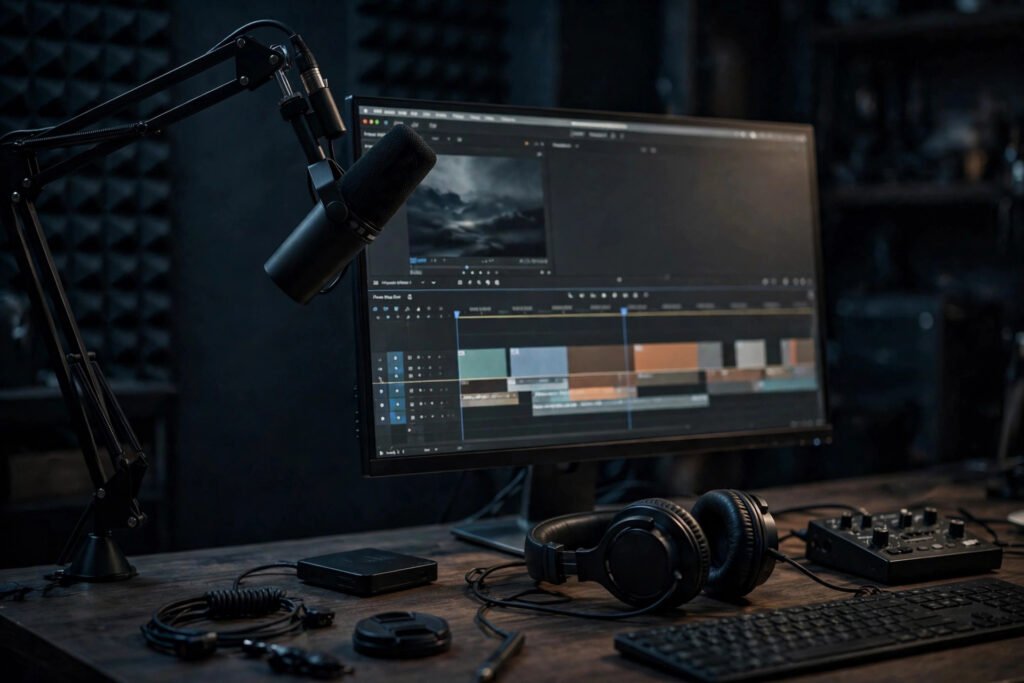
Editing is the biggest hidden cost in faceless production, because “edited” can mean very different things. At the light end, it means stock clips cut to a voiceover with basic captions. At the deeper end, it means pacing tuned scene by scene, visuals matched to each line of narration, sound design that supports the story, and captions styled for the channel. Documentary niches need more of this work than simple listicle formats, because the visuals have to carry the narrative. Consistency matters too: a channel looks professional when every video shares the same pacing and visual language.
5. Thumbnails, titles, and SEO
A video nobody clicks might as well not exist, so packaging is real work, not a free add-on. A thumbnail needs a clear focal point, readable text at small sizes, and a design that fits the channel’s style. Titles need to promise something specific without misleading viewers, and descriptions and tags help YouTube place the video with the right audience. Some quotes include all of this; others hand you a finished video and leave packaging to you. Check the line items — script, voiceover, editing, thumbnail, SEO, management. If a quote is silent on thumbnails and SEO, you are doing that work yourself or paying someone else to do it later.
6. Channel management and consistency
Publishing is not just pressing upload. A managed channel needs a content calendar, scheduled uploads, metadata checks, comment and copyright monitoring, and regular review of what is working. That ongoing management turns a batch of videos into a channel with momentum. A provider that only delivers video files leaves strategy, scheduling, and quality control on your desk, and that work adds up fast at several uploads a week. Full management costs more because it covers the weeks between uploads, not just the videos — and it is the part that buys back your time.
7. Niche complexity and revision rounds
Not every niche costs the same to produce. A straightforward explainer niche needs less specialist research than finance, health, or legal topics, where claims need care and sources need checking. Technical niches may also need custom visuals or on-screen graphics. Revision policy matters too: one consolidated revision round keeps a project moving, while unlimited open-ended revisions often signal that the first draft is not expected to be right. Ask how revisions work before you sign — how many rounds are included, how fast feedback is turned around, and what counts as a scope change. Clear answers prevent the most common billing surprises.
What the market tiers actually mean
Once you understand the seven drivers, the market starts to make sense. At the budget end, single freelancers and tiny gig listings sell one piece of the pipeline, often just editing or just a script. That works if you already handle everything else and enjoy project managing. In the middle, freelancers and small teams sell fuller production, but you often still coordinate the pieces and fill gaps. At the premium end, done-for-you services own the whole pipeline — research, script, voiceover, editing, thumbnail, SEO, and management — under one roof, with a consistent style across every video. The mistake is paying a budget price and expecting premium coverage. Match the tier to how much work you want to keep.
Xoomo YouTube Automation packages
At Xoomo YouTube Automation, pricing is simple and public. Every long video is 8 minutes and includes a thumbnail, SEO, and channel management. Our monthly plan covers 25 long videos plus 10 Shorts, for channels that want a serious, consistent pace.
| Package | Videos | Price |
|---|---|---|
| Starter batch | 5 videos | $390 |
| Growth batch | 10 videos | $790 |
| Growth batch | 12 videos | $890 |
| Channel batch | 15 videos | $1,099 |
| Channel batch | 20 videos | $1,499 |
| Channel batch | 25 videos | $1,899 |
| Monthly plan | 25 long videos + 10 Shorts | See packages |
Notice how the per-video cost falls as the batch grows. That is the volume effect from factor one, working in your favor: bigger batches let our team plan topics, scripts, and editing in runs instead of starting from zero on every video. See the full details on our packages page, and talk it through with us on contact before you commit.

How to compare two quotes fairly
Use this checklist before you choose, and run every quote through the same questions:
- Same video length and monthly count on both quotes?
- Script research included, or just a loose outline?
- Voiceover type named, with samples in your niche?
- Thumbnail, title, description, and tags included?
- Channel management and scheduling included, or files only?
- Revision rounds stated clearly, with turnaround times?
- Who owns the channel, the videos, and the project files?
If a quote cannot answer most of these, that silence is information: the work is either not included or not planned, and you will meet the gap later, when it costs more to fix. A good provider answers plainly, in writing, before any invoice appears.
Questions to ask before you pay
Three questions will save you more money than any discount. First, what exactly is included in each video, from research to thumbnail? Second, what happens if a video underperforms — do you review it together and adjust, or just move on? Third, how does the provider handle your niche: do they research it properly, or recycle formats from other channels? The answers show how the provider thinks about your channel, not just how they price it.
Frequently asked questions
Why do YouTube automation quotes vary so much?
Because providers bundle different amounts of work. Length, volume, script depth, voiceover, editing, packaging, and management all move the price, so two quotes for “a faceless channel” can describe very different services.
Is the cheapest option ever the right choice?
It can be, if you already handle strategy, scripting, thumbnails, and management yourself and only need one piece done. It is the wrong choice if you expect a full done-for-you channel at a single-task price.
Does a higher price guarantee better results?
No. Price buys production scope and consistency, not views. A higher-priced service should give deeper research, stronger editing, and steadier publishing, but audience response still depends on niche, topics, and patience.
How many videos should I start with?
Start with a batch you can review properly and afford to sustain. A small batch lets you judge quality and style before scaling; a larger batch suits channels ready to publish consistently from day one.
What should be included in every video?
At minimum: researched script, voiceover, full edit, thumbnail, title, description, and tags. Management and scheduling should be stated separately, so you know if they are included or left to you.
Can I change package size later?
Yes. Most channels start with a batch that fits their budget, review the first videos, then scale up once the style and rhythm feel right. Talk to us on our contact page about the right starting point.
Start with a quote you can actually compare
Once you know the seven drivers, you can read any quote in minutes and ask the questions that matter. Explore our packages page, or reach out through contact and tell us about your niche. We will help you pick the batch that fits your goals and budget — and if a smaller start makes more sense, we will say so. Client channel — identity protected under NDA.